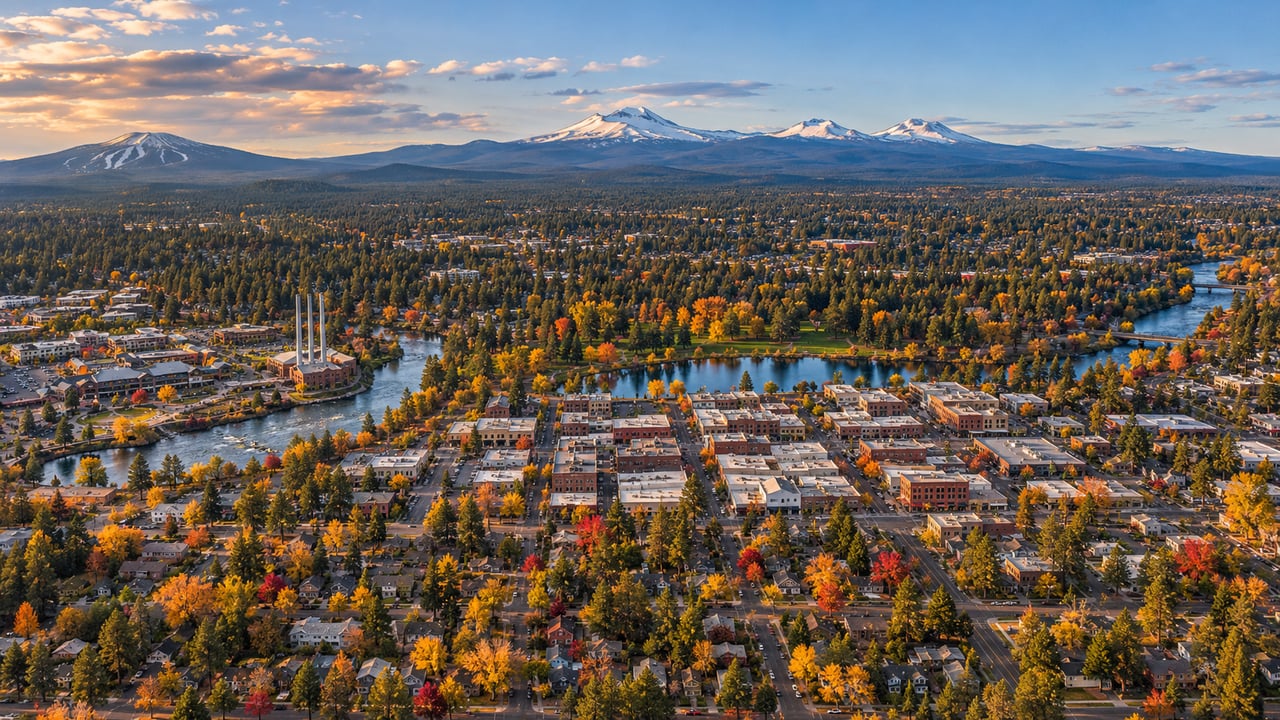
Remember when finding a home in Bend felt a little like trying to snag a parking spot downtown on a busy summer Saturday? You'd find something you liked, think about it for a few hours and discover someone else had already beaten you to it. For a while, that was simply how Bend real estate worked. Homes sold quickly, asking prices were often just the starting point and buyers sometimes had to make decisions before they'd had much time to think. Well, the market has changed its tune.
October's numbers tell us that Bend has moved into a different chapter. Not a particularly dramatic one and certainly not the doom and gloom story that sometimes accompanies conversations about a slowing housing market. It's more like the market has finally decided to stop sprinting everywhere. The question is whether our expectations have caught up.
We're Still Thinking About Yesterday's Market
Here's something I've noticed over the years. Real estate markets can change considerably faster than people's perceptions of them. Sellers remember what their neighbor received for a similar home two years ago. Buyers remember losing out on properties when multiple offers were practically a given. Those experiences tend to stick with us. Yet October's market looks quite different from the one that created those memories.
Bend's median sale price was $728,000, the same figure we've seen for three consecutive months. The median price per square foot came in at $350. Neither number suggests that Bend real estate has suddenly become inexpensive. Anyone who's lived here for a while knows we've traveled a long way from the days when a nice home could be purchased for a fraction of today's prices.
What the numbers do suggest is that the upward pressure we've become accustomed to has eased. October's median was approximately 6.4% below the same month last year. That doesn't mean every homeowner has experienced a comparable decline in value. The types of homes that sell each month influence the median. Still, the broader message is worth considering. Today's market doesn't care what a home might have sold for at the peak. It cares what buyers are willing and able to pay today. That can take some getting used to.
The Financing Conversation Has Become a Bigger Deal
If there's one part of October's numbers that deserves more attention, I think it's the financing picture. My October market snapshot recorded 54 cash purchases and 65 financed purchases, with financed transactions falling by 31 from the previous month. That's a sizable change.
Cash buyers continue to represent a substantial portion of Bend's housing activity, while buyers relying on mortgages face a different set of calculations. Consider what goes into purchasing a home today. There's the purchase price, of course. Then come the mortgage payment, property taxes, insurance, maintenance and whatever improvements a buyer might want to make. A home can be everything someone hoped to find and still stretch their monthly budget beyond what's comfortable. That creates a situation where the desire to purchase hasn't necessarily disappeared but the ability to make the numbers work has become more challenging.
It's also why I think we need to be careful when interpreting slower sales activity. Fewer transactions don't automatically mean fewer people want to live in Bend. Sometimes the enthusiasm is still there. The math just needs a little help. For sellers, understanding that distinction can be useful. A buyer may genuinely love a home and still need a price adjustment or some assistance with closing costs to make the purchase practical.
The Great Bend Real Estate Waiting Game
October recorded 137 residential sales, down from 155 in September. Homes were also taking longer to sell, with the reported marketing time reaching 40 days. Neither statistic is especially surprising as Bend moves toward winter. What's more revealing is how the pace of the market influences behavior. When homes are selling in a matter of days, buyers tend to focus on whether they can get an offer accepted. When homes are taking several weeks to sell, the conversation changes. Is the asking price reasonable? How does the condition compare with other homes? Would it make more sense to buy now or wait? Could the seller be willing to negotiate?
Those are reasonable questions and buyers now have more opportunities to ask them.
Sellers, meanwhile, are making their own calculations. Should they adjust the price? Wait for another buyer? Make improvements? Rent it out? Take the home off the market until spring? There isn't one correct answer for every property.
What we're seeing is a market where decisions require a little more thought than they did when demand seemed almost unlimited. Personally, I don't see anything wrong with that. Buying or selling a home is a major financial decision. Having time to consider the details is a pretty good thing.
Three Months of Inventory Doesn't Tell the Whole Story
Bend continues to have approximately three months of housing inventory. At first glance, that might suggest the market hasn't changed much. Yet the experience of shopping for a home today feels considerably different from the experience buyers had during the most competitive years.
That's because inventory is only part of the equation. The number of buyers actively competing, their purchasing power, the condition of available homes and sellers' expectations all influence how the market behaves. October's inventory figure is a good reminder that statistics need context. A city can have a relatively limited supply of homes without every listing attracting immediate attention. That's exactly why I hesitate to label an entire market as either a buyer's market or a seller's market. Those descriptions can be useful shorthand as they often oversimplify what's actually happening.
Bend's housing market isn't a light switch that flips from one side to the other. It's more like a collection of smaller markets, each responding to its own mix of price, location, condition and demand.
Maybe the Biggest Change Is That Buyers Can Say No
For a long time, buyers were encouraged to move quickly, make strong offers and avoid asking for too much. That was the reality of the market. Today, buyers have more freedom to decide that a particular property simply isn't the right fit. Maybe the floor plan doesn't work. Perhaps the house needs more updating than they're comfortable taking on. Or the price doesn't make sense compared with other available properties.
Being able to walk away without feeling that another opportunity might never come along is a meaningful change. It also means sellers need to understand that buyers are comparing more than square footage and bedroom counts. They're considering the entire package. The homes that make the strongest impression aren't necessarily the newest, largest or most expensive. They're the ones that offer buyers a convincing reason to choose them. That may sound obvious but it's a pretty significant departure from a market where limited inventory sometimes did much of the selling.
Bend Hasn't Lost Its Appeal. The Conversation Has Just Changed.
I've lived in Bend since 1976, long enough to remember when the city was a much smaller place and real estate conversations involved numbers that would sound almost unbelievable today. Over those years, I've watched Bend grow, reinvent parts of itself and attract people for all sorts of reasons.
When the market collapsed in the late 2000’s I would blog to all the folks throwing Bend under the bus as an overrated place to live that they would be back. I touted the outdoor lifestyle, the fabulous weather, the fun and eclectic downtown along with it being a great place to raise a family. All remain major reasons for what draws folks to Central Oregon, now days they come to raise families, build careers, start businesses, retire here but most of all put down roots. For many it has become much more than skiing, mountain biking or floating the river which are now side benefits to living here.
Those reasons don't disappear when mortgage rates rise or home sales slow. As in the late 2000’s and numerous dips in the economy before, Bend isn't immune to the financial realities affecting housing markets across the country. Affordability matters. The cost of borrowing matters. The gap between what sellers hope to receive and what buyers can comfortably pay matters.
October's statistics reflect those realities. They don't suggest Bend has suddenly become less desirable. They suggest the market is working through the challenge of matching demand with affordability. That's a very different story.
What Should You Be Watching Right Now?
Rather than trying to predict exactly where prices will be six months from now, I suggest paying attention to how buyers and sellers respond to the current conditions. Will the median sale price continue holding near $728,000? Will financed purchases recover or will cash transactions continue accounting for an unusually large share of activity? Will homes remain on the market longer as winter approaches? Perhaps most importantly, will sellers begin pricing their homes closer to where buyers are actually making offers?
Those answers will tell us more about the direction of Bend real estate than any single month's median price. For someone planning to buy, there's value in understanding where opportunities are developing rather than trying to guess the absolute bottom of the market. For someone considering selling, the challenge is to recognize that yesterday's pricing expectations may not produce today's best result.
Neither side needs to be in a hurry simply because that's how the market used to operate.
A Little Less Frenzy Might Be Exactly What Bend Needs
October wasn't a blockbuster month for Bend real estate, it wasn't a collapse, either. It was a month when 137 homes changed hands, prices remained relatively steady and buyers had a little more say in how transactions came together.
The bigger story isn't that the market has slowed. It's that we're finally seeing a housing market where buyers and sellers have to meet each other somewhere in the middle. That may require a few adjustments in expectations, but it also creates opportunities for more thoughtful decisions. Bend has been through plenty of real estate cycles over the decades and each one has brought its own challenges and opportunities. This one is reminding us that a healthy housing market doesn't have to be measured by how quickly homes sell or how much prices increase. Sometimes a market that gives everyone a little room to think is doing exactly what it needs to do.
And after years of watching buyers race to make decisions, I think there's something refreshing about that.
Curious about what October's market means for your home or your plans to buy?
The citywide numbers are a useful starting point but the details can look quite different depending on the property and neighborhood.
I'm always happy to talk through what's happening in your corner of Bend.