Bend homeowners should think about wildfire risk, even in town!
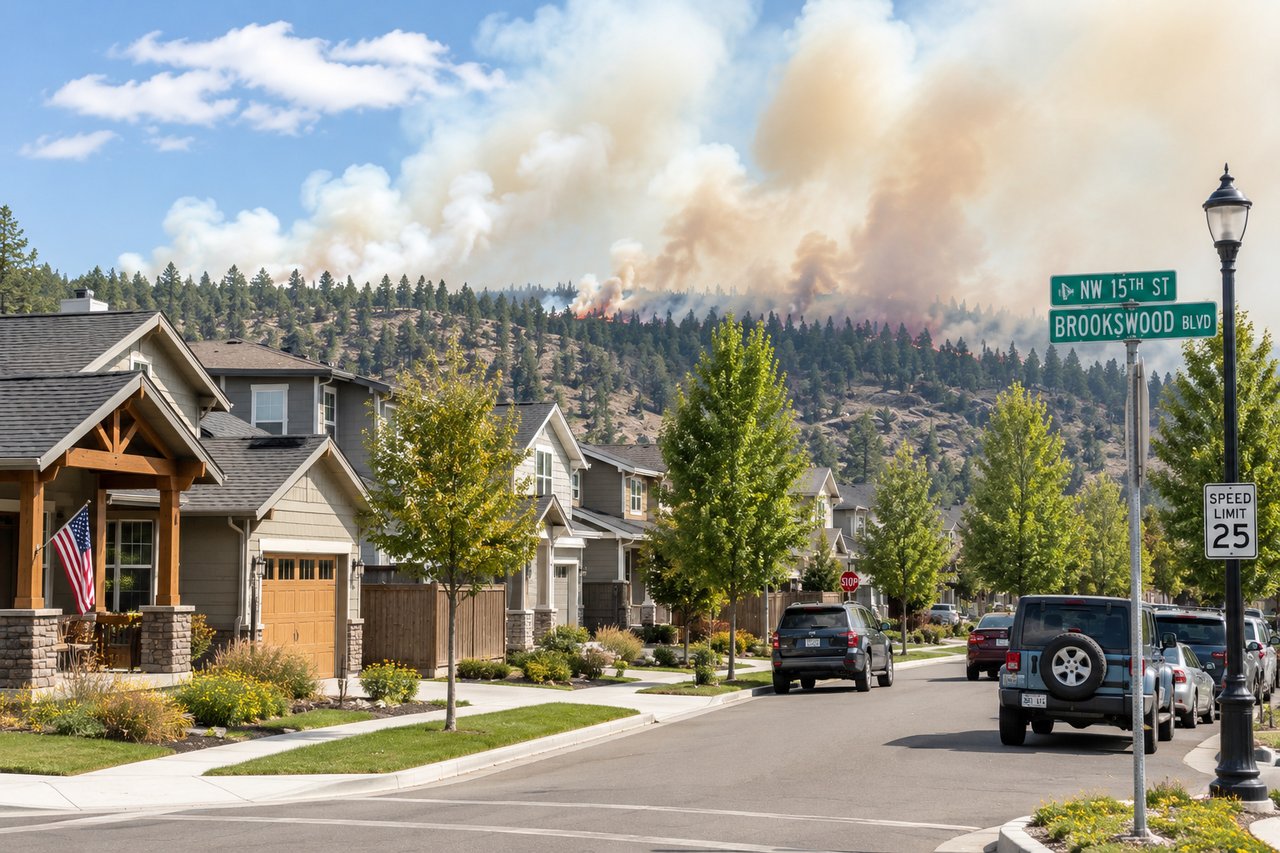
When most people think about wildfire danger in Central Oregon, they picture a cabin tucked into the pines west of town or a home backing up to National Forest land. The reality? Wildfire doesn't care much about zip codes, county lines or any other lines in the sand created by man.
Whether you live on acreage in Tumalo, near Skyliners Road or in a neighborhood in the heart of Bend, wildfire can become an urban problem surprisingly fast. Recent fires throughout the West have shown that once embers become airborne, they can travel more than a mile ahead of a fire front looking for their next place to land. And unfortunately if your gutters are full of pine needles, bark mulch is up against the foundation or your stack of firewood is sitting for winter weather convinence up next to or against the garage it can become an invitation for those embers.
The good news is that protecting your home doesn't necessarily require turning your yard into a gravel parking lot. In fact, many of the most effective wildfire mitigation measures are relatively simple:
Keep the first five feet around your home free of combustible materials. This one is tough since many of us have very nice mature shrubs that have taken years to grow to an impressive size. To lose them could be heart breaking but nowhere near the heart break of losing your home.
Clean leaves and pine needles from roofs and gutters.
If you have numerous pine trees like I do it is a constant battle!
Trim branches away from roofs and chimneys.
Remove dead vegetation and ladder fuels.
Store firewood away from structures during fire season.
Consider ember-resistant vents when replacing or upgrading exterior components.
Think of it as creating a buffer zone between your home and an airborne ember's bad intentions.
The City of Bend recently adopted new wildfire resistant building standards for new homes and ADUs, reflecting a growing recognition that wildfire resilience is becoming as important as energy efficiency and structural integrity. But even if your home was built decades ago, there are practical steps you can take today that can significantly improve its chances of surviving a wildfire event. One of the biggest misconceptions heard is, "I live in town, so I'm safe." We've all seen the images from fires in California, Colorado, Washington and even here in Oregon that tell a different story. Neighborhoods can become vulnerable when embers move into urban areas and ignite landscaping, fences, decks, and roofs.
The reality is that wildfire preparedness isn't just a rural homeowner issue anymore, it's a Central Oregon homeowner issue. As Bend continues to grow and more homes are built along the edges of natural areas, the line between urban living and wildfire risk becomes increasingly blurred.
Fortunately, a little prevention now can go a long way toward protecting what matters most later. Because when wildfire season arrives, the best time to prepare was yesterday. The second-best time is today.